

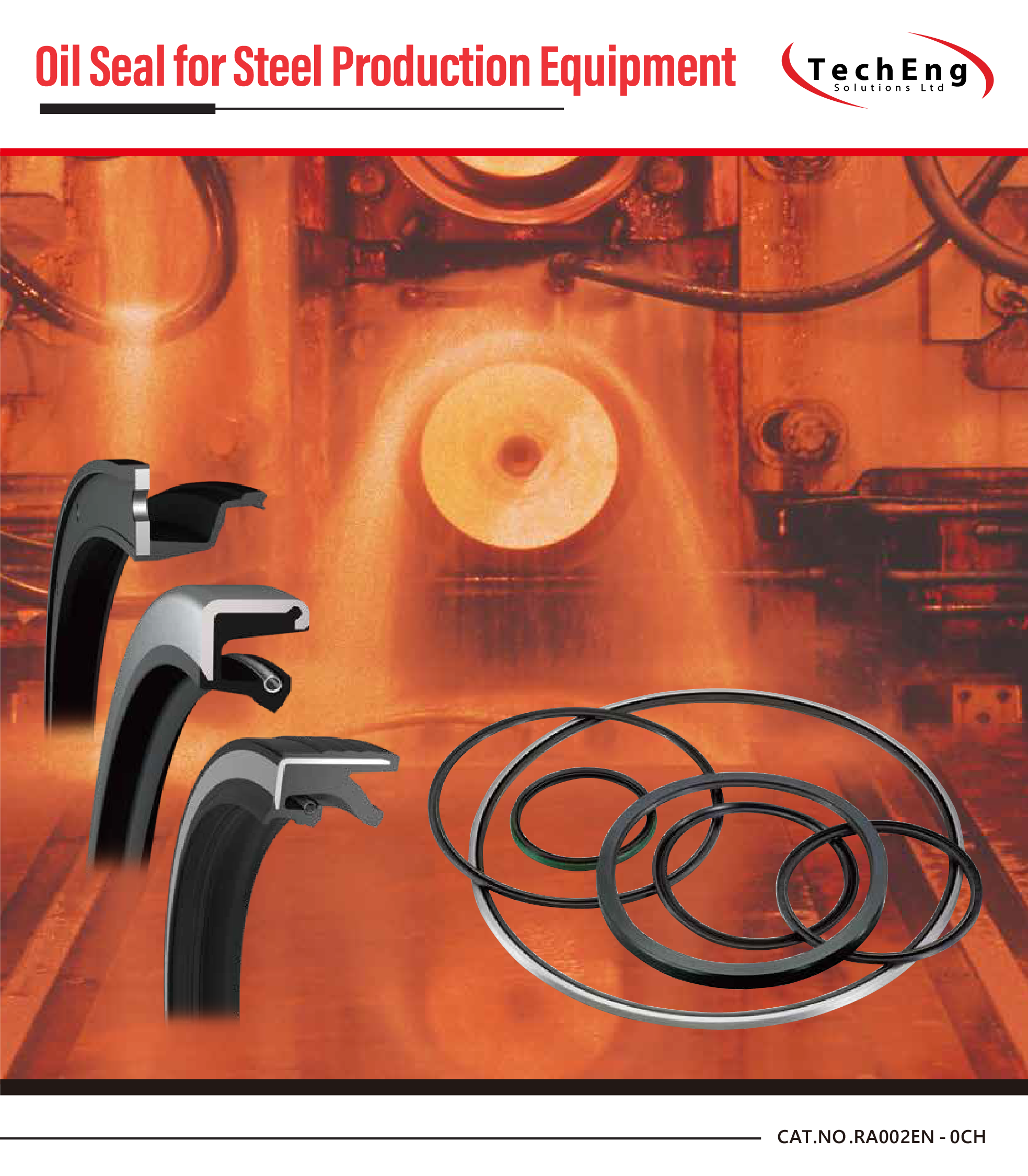

An Oil Seal, also known as a rotary shaft seal, is a crucial component in steel production equipment that serves to protect bearings and other internal machinery from the harsh operating environment. Steel mills are characterized by extreme conditions, including high temperatures, heavy loads, and the presence of contaminants like water, dirt, and scale. An oil seal is designed to function as a barrier, preventing the leakage of lubricants while simultaneously blocking the entry of these external contaminants.
Primary Functions oil Seal in Steel Production
- Lubricant Retention: Steel production equipment, such as rolling mills, require a constant supply of lubrication to reduce friction and wear on bearings and other moving parts. The oil seal ensures that the lubricating oil or grease stays in place, preventing expensive leaks and ensuring the smooth and efficient operation of the machinery.
- Contaminant Exclusion: The steel manufacturing process generates significant amounts of water (from cooling), dust, and abrasive scale. These contaminants can quickly damage sensitive components. An oil seal creates a tight barrier to prevent them from entering the equipment’s housing, thereby extending the lifespan of the machinery and reducing maintenance costs.
- Pressure and Speed Management: Equipment like rolling mills operate at high speeds and under immense pressure. The oil seal must be designed to withstand these conditions without losing its integrity. Special designs and materials are used to ensure the seal’s performance even under extreme rotational speeds and fluid pressure.
- Preventing Media Mixing: In some cases, a seal may be required to separate two different types of fluids, such as lubricating oil and cooling water. Oil seals with double lips can be used for this purpose, preventing the intermixture of these two media, which could lead to contamination and equipment failure.
Key Features and Materials
Due to the demanding environment of a steel mill, oil seals for this industry are often designed with specific features and made from specialized materials:
- Design: Oil seals for steel production can be single-lip or double-lip, with the second lip acting as a “dust lip” to provide an extra layer of protection against contaminants. They often have a metal case for enhanced structural rigidity and a garter spring to maintain a consistent sealing force against the rotating shaft.
- Materials: Standard rubber materials like Nitrile (NBR) are not always sufficient for the high temperatures found in a steel mill. Therefore, seals are often made from high-performance elastomers and polymers with superior thermal and chemical resistance. Common materials include:
-
- Viton (FKM): A fluoroelastomer with excellent resistance to high temperatures, chemicals, and oils.
- PTFE (Polytetrafluoroethylene): Known for its extremely low friction and high-temperature resistance, often used in metal-cased seals for extreme conditions.
- HNBR (Hydrogenated Nitrile Butadiene Rubber): Offers good abrasion resistance and can withstand higher temperatures than standard NBR.