



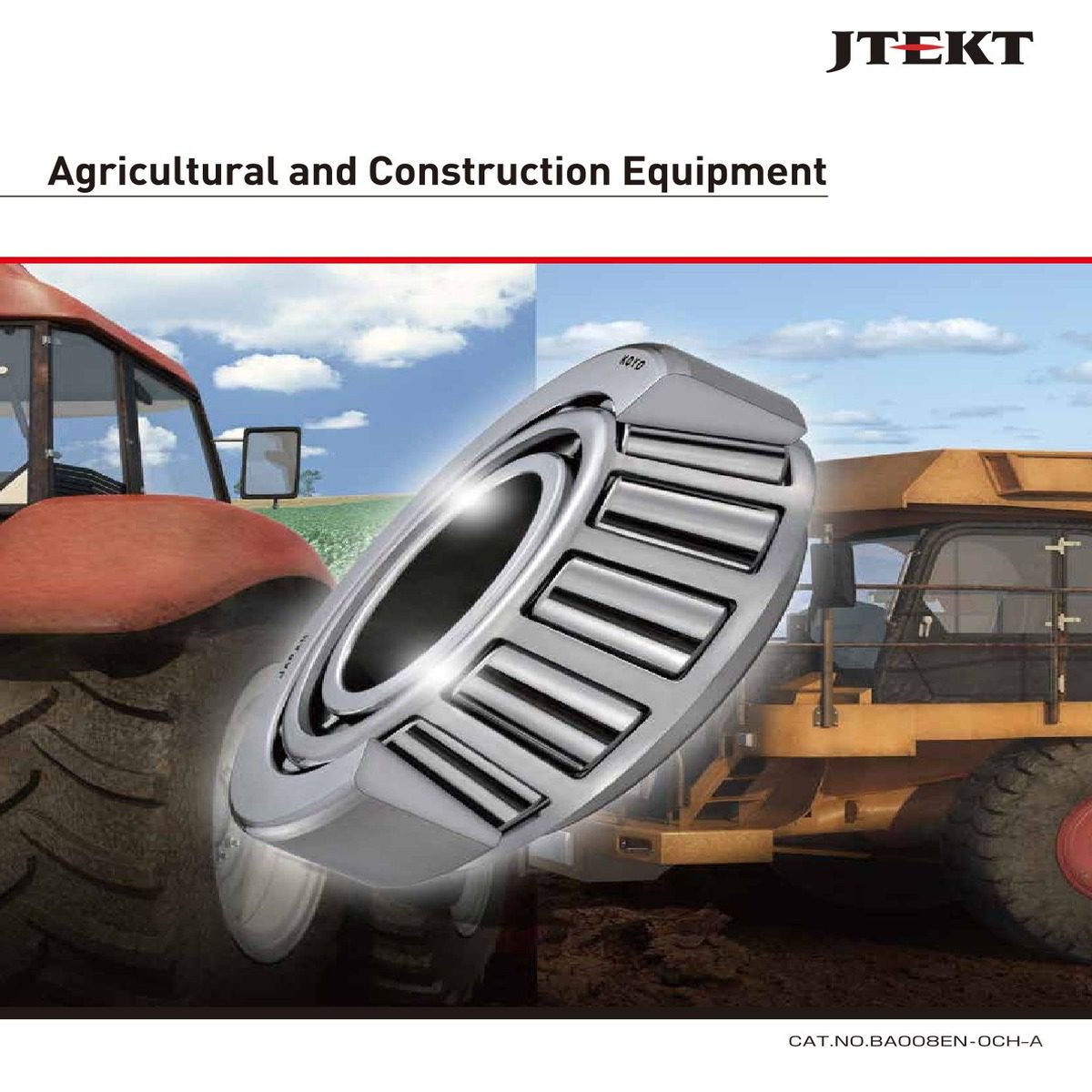
Bearing for Agricultural and Construction Equipment
Common Types of Bearings for Agricultural and Construction Equipment
Several types of bearings are purpose-built for these applications:
-
Tapered Roller Bearings: Used in wheel hubs and transmissions of tractors and heavy trucks where high radial and axial loads are present.
-
Spherical Roller Bearings: Ideal for articulated joints, pivot points, and shafts that may experience misalignment, such as in combines and excavators.
-
Agricultural Disc Bearings: These are special sealed ball bearing units designed for disc harrows and tillage equipment. They are often “sealed for life” and do not require maintenance.
-
Deep Groove Ball Bearings: While also used in less demanding applications, specially sealed and pre-lubricated versions are used in fans, pulleys, and small shafts to provide protection from contaminants.
The longevity and reliability of agricultural and construction equipment depend heavily on selecting and maintaining the correct type of bearing, as improper lubrication and contamination are the leading causes of bearing failure in these industries.

Click and Collect The Catalogue

Click and Collect The Price
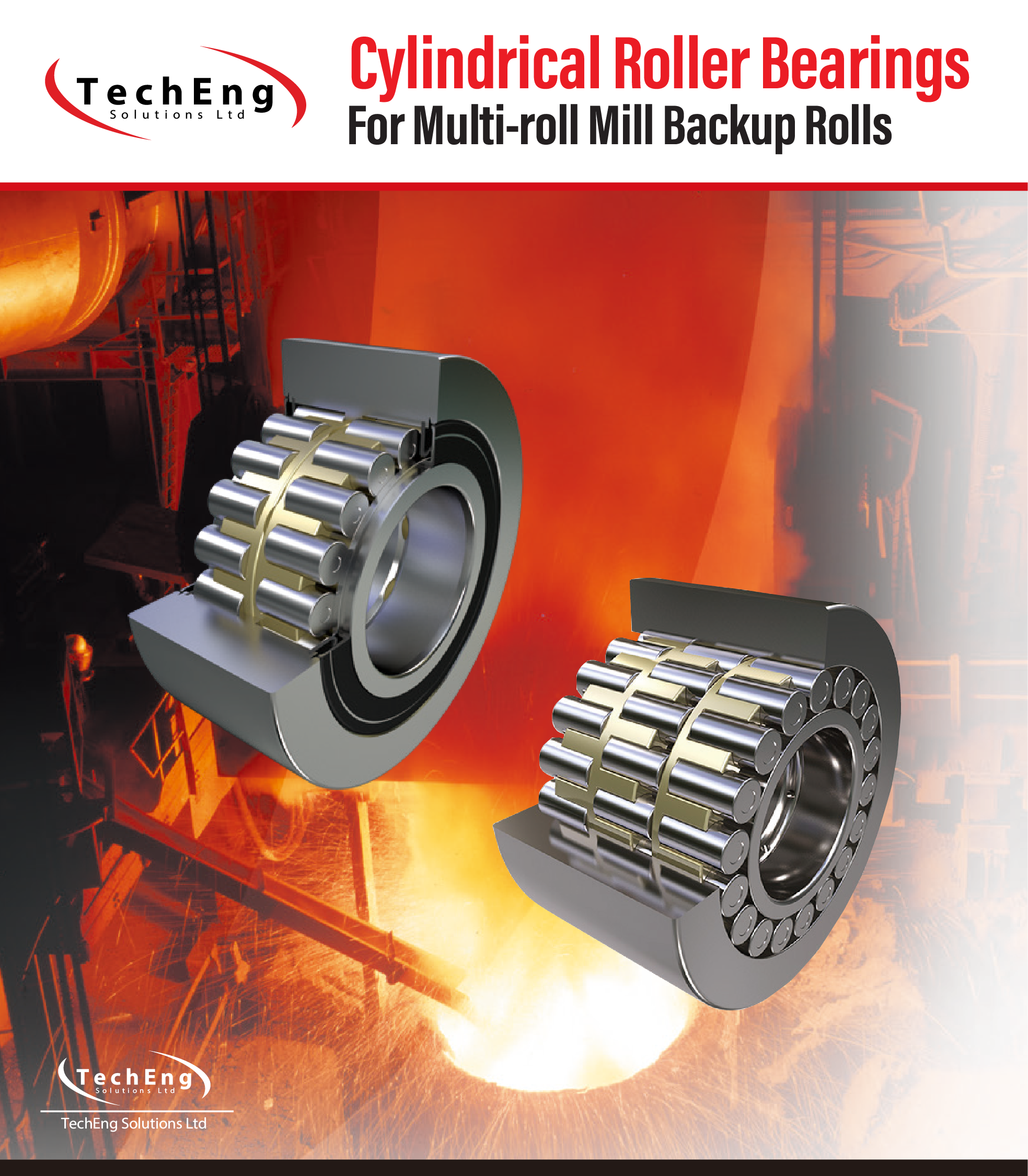

Cylindrical Roller Bearing
A Cylindrical Roller Bearing is a type of rolling-element bearing that uses cylinders as its rolling elements instead of balls. Because the cylindrical rollers make a linear contact with the inner and outer raceways, they can distribute loads over a larger surface area compared to ball bearings, which have point contact. This design gives them a significantly higher radial load capacity and makes them suitable for applications involving heavy loads and high speeds.
Key Characteristics and Types of Cylindrical Roller Bearing
Load Handling: Cylindrical roller bearings are primarily designed to handle heavy radial loads. While some variants with flanges on the rings can handle limited axial loads, they are not ideal for applications with significant thrust forces.
High Rigidity: Their design provides high rigidity, which is crucial for precision machinery where minimal deflection is required under load.
Separable Design: Many cylindrical roller bearings are separable, meaning the inner and outer rings can be mounted separately from the roller and cage assembly. This makes installation and dismounting easier.
Types: Cylindrical roller bearings come in a variety of designs, typically distinguished by the configuration of the ribs (flanges) on the inner and outer rings:
NU and N Series: These have ribs on one ring but not the other, allowing the bearing to accommodate axial displacement between the shaft and housing. They are used as non-locating or “floating” bearings.
NJ and NUP Series: These have ribs on both rings, allowing them to support a small amount of axial load in one or both directions, respectively.
Full Complement: These bearings have no cage and are packed with the maximum number of rollers. While they have an even higher radial load capacity, they are not suitable for high-speed operation.
Multi-row: Bearings with two or four rows of rollers are used for extremely heavy radial loads, such as in rolling mills.
Applications :
Cylindrical roller bearings are commonly found in industries where heavy machinery and high-speed rotation are required. Their ability to withstand immense radial forces makes them indispensable in:
Industrial Gearboxes: For supporting gears and shafts under heavy loads.
Electric Motors: Especially for large, high-power motors.
Pumps: In applications where robust support is needed for the rotating shaft.
Rolling Mills: Where they are subjected to very high radial loads during metal forming.
Wind Turbines: In the gearbox and generator, where they handle high speeds and heavy loads from the rotor.
Machine Tools: For providing the rigidity and precision needed for spindles and other rotating components.
Click and Collect The Catalog
Click and Collect The Price
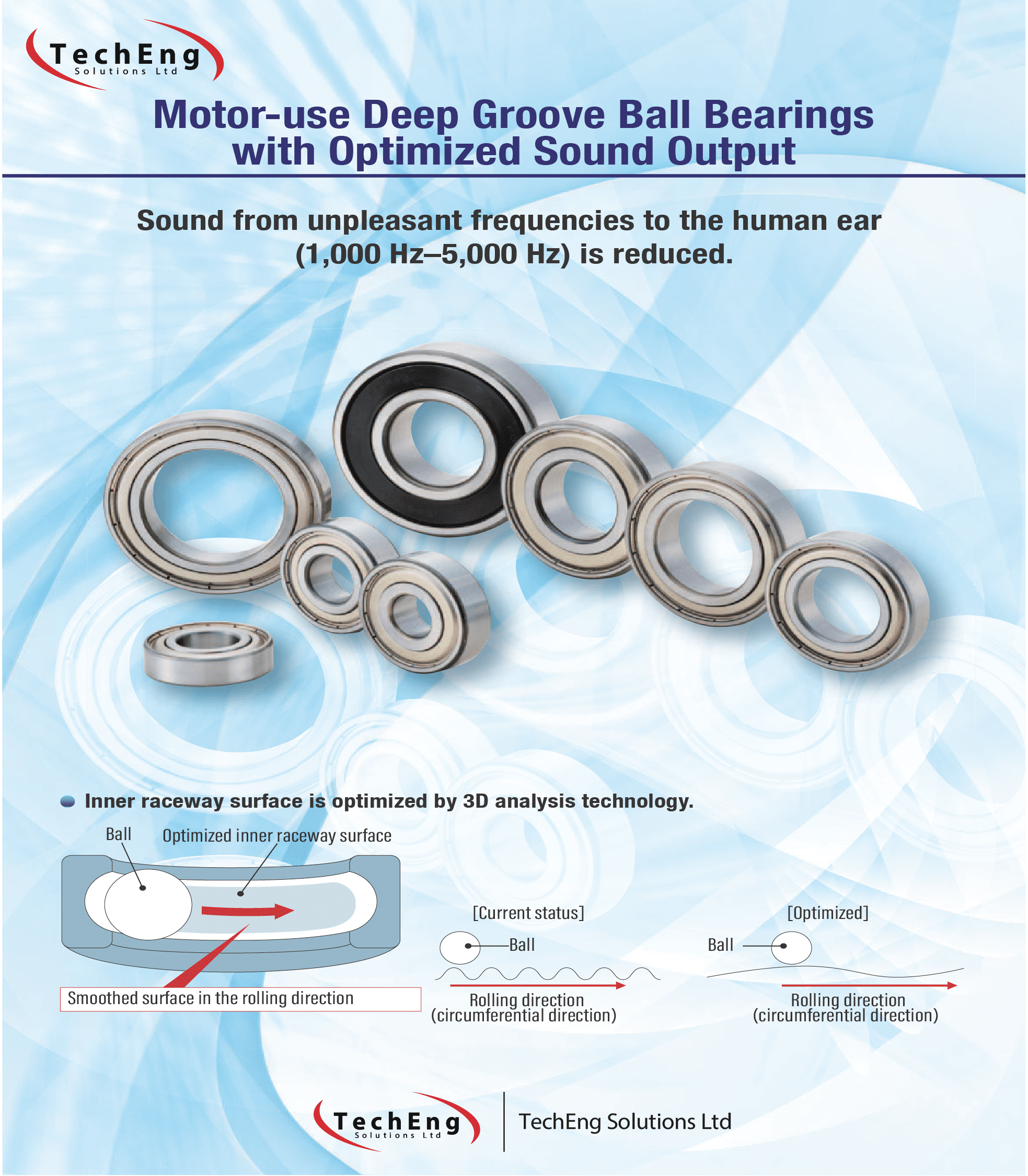
Deep Groove Ball Bearing
Key Features and Advantages :
- Versatility: Can handle both radial and axial loads.
- High-Speed Capability: The design and low friction allow for very high rotational speeds.
- Low Friction and Noise: Ideal for applications where quiet and efficient operation are required.
- Easy to Mount: Their simple and robust design makes them easy to install and maintain.
- Low Maintenance: Many deep groove ball bearings are sealed and pre-lubricated for life, requiring little to no maintenance.
Click and Collect The Catalog
Click and Collect The Price
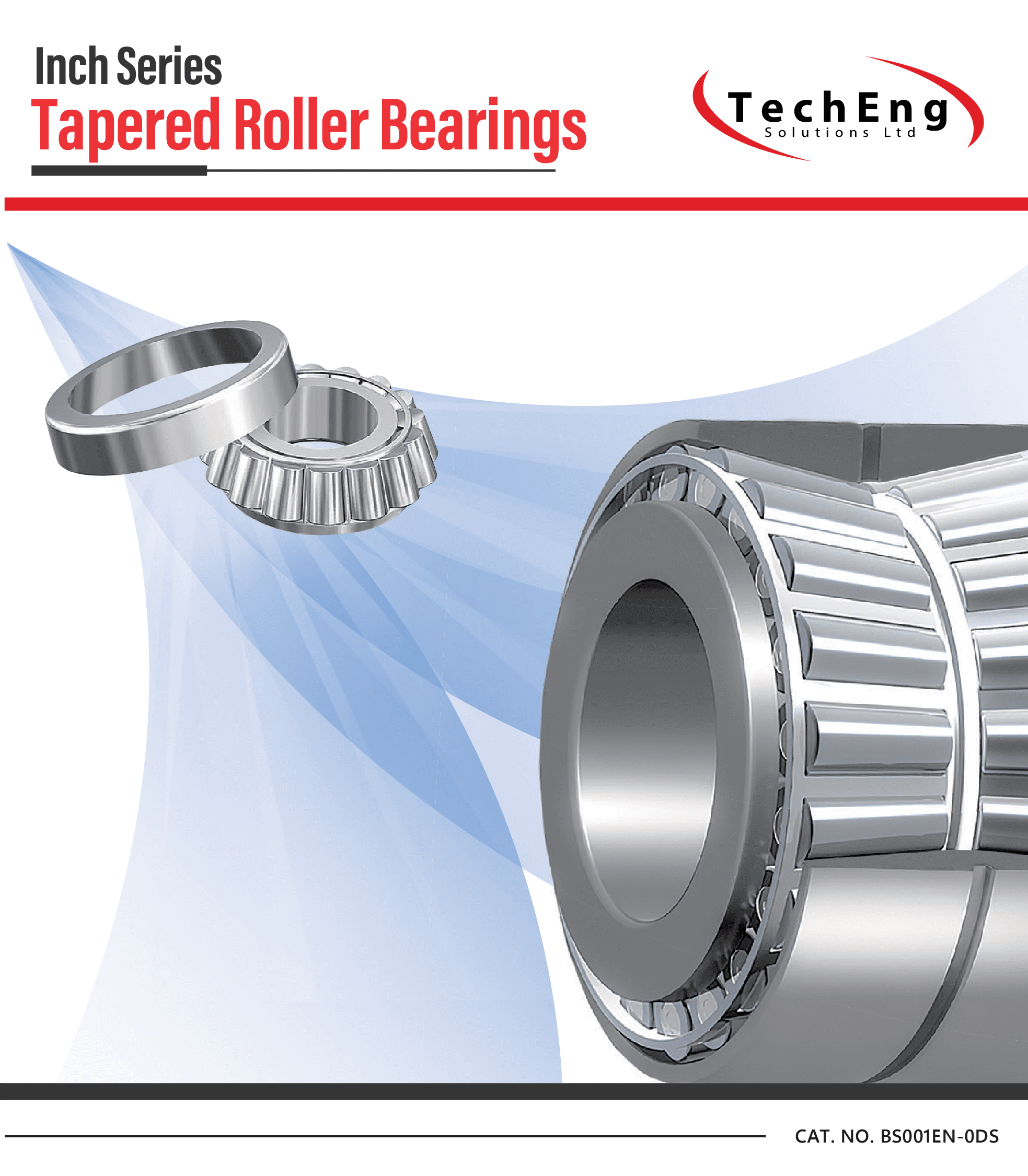
Inch Series Tapered Roller Bearing
An “Inch Series” Tapered Roller Bearing is a type of tapered roller bearing whose dimensions (bore, outside diameter, and width) are standardized and measured in inches, as opposed to the more common metric system.
Key Features of Tapered Roller Bearings
To understand an Inch Series bearing, it’s important to first understand the general characteristics of all tapered roller bearings:
Tapered Design: The inner ring (cone), outer ring (cup), and rollers are all designed with a tapered or conical shape. When a load is applied, the rollers make a linear contact with the raceways, allowing the bearing to handle heavy loads.
Combined Loads: The tapered geometry is specifically designed to manage both heavy radial loads (perpendicular to the shaft) and heavy axial loads (parallel to the shaft).
Separable Components: The cone (inner ring, rollers, and cage) and the cup (outer ring) can be separated. This simplifies installation, as the two components can be mounted onto the shaft and in the housing independently.
Adjustable Clearance: The internal clearance (or “end play”) can be adjusted during installation by changing the axial position of the cone relative to the cup. This allows for precise setting of the bearing for optimal performance in a given application.
The “Inch Series” Distinction
The term “Inch Series” simply refers to the system of measurement used for the bearing’s dimensions.
Metric Series: Bearings with dimensions standardized in millimeters (mm).
Inch Series: Bearings with dimensions standardized in inches (in).
This distinction is crucial for interchangeability and proper fit. Using a metric bearing in a housing designed for an inch bearing (or vice versa) can lead to a loose fit, improper loading, and premature bearing failure.
Naming Convention and Standards
The naming conventions for Inch Series bearings are different from Metric Series. They often use a “Set” number, which is a combination of the part numbers for the inner ring assembly (the cone) and the outer ring (the cup). For example, a bearing might be designated as “Set 4” or “25590/25520,” where “25590” is the part number for the cone and “25520” is the part number for the cup.
These bearings are typically manufactured and designated according to standards set by organizations such as the American Bearing Manufacturers Association (ABMA).
Common Applications
Inch Series tapered roller bearings are widely used in a variety of industries, particularly in North America, where inch-based engineering standards are prevalent. Common applications include:
Automotive: Wheel hubs, transmissions, and differentials.
Heavy-Duty Trucks: Wheel ends and gearboxes.
Agricultural Equipment: Tractors, harvesters, and other farm machinery.
Trailers: Wheel bearings for trailers of all sizes.
Industrial Machinery: Pumps, gearboxes, and other heavy equipment.
Click and Collect The Catalog
Click and Collect The Price
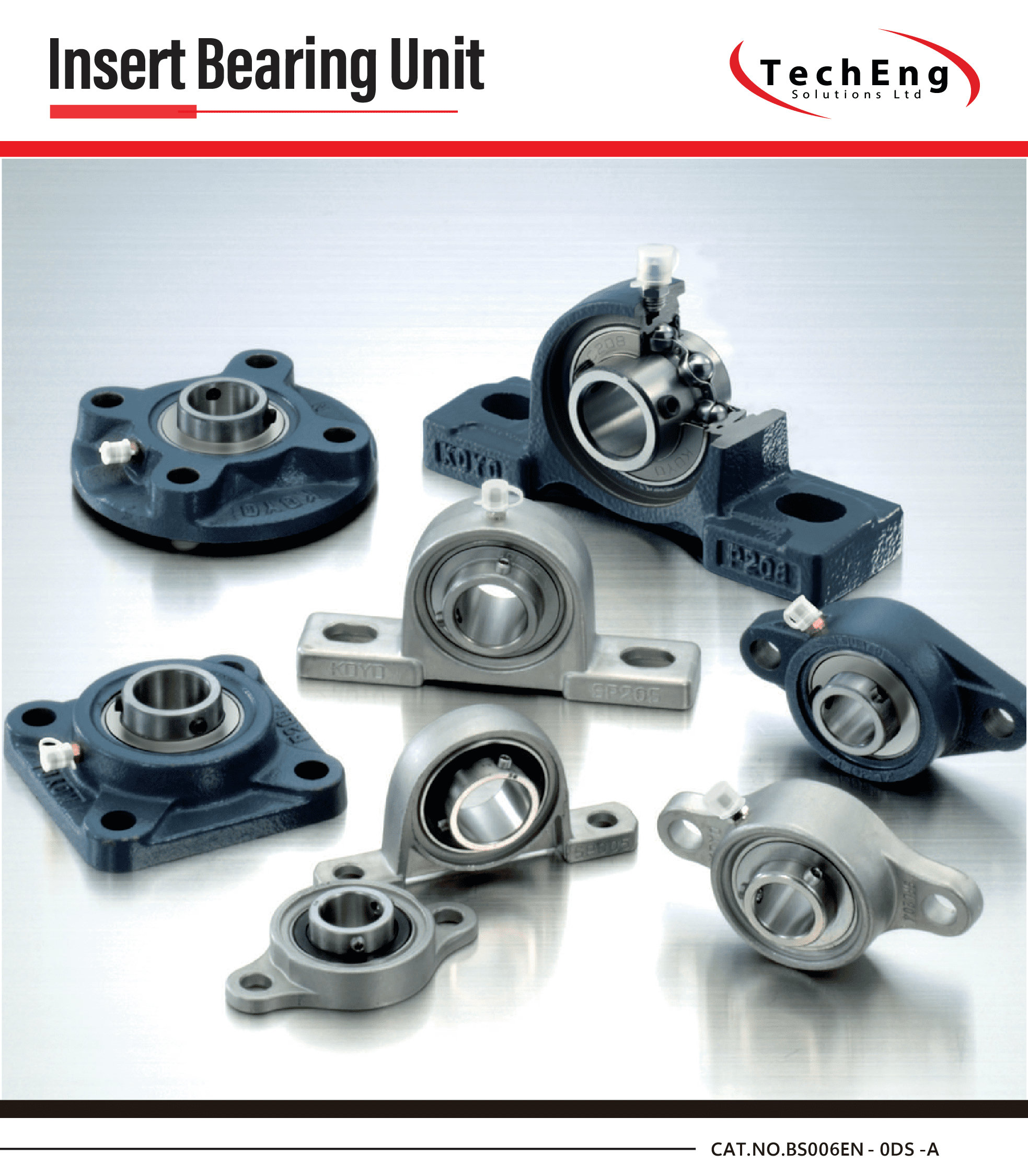
Insert Bearing Unit
An Insert Bearing Unit is a ready-to-mount bearing assembly that consists of a ball bearing (insert bearing) and a separate housing. These units are designed for quick and easy installation, making them popular in industrial and agricultural machinery.
The key features of an insert bearing unit are:
- Insert Bearing: This is a deep groove ball bearing with a spherical outer ring. This unique shape allows the bearing to “self-align” and compensate for initial shaft misalignment. It also has an extended inner ring with a locking mechanism, such as set screws or an eccentric collar, which secures it directly onto the shaft without the need for additional components.
- Housing: The housing is typically made of cast iron, pressed steel, or plastic. It has a corresponding spherical bore that holds the insert bearing, allowing it to swivel and align. Housings come in various shapes, including pillow blocks, flanged units, and take-up units, to suit different mounting requirements.
How They Work
Insert bearing units are designed to simplify the mounting process. Instead of needing a precision-machined shaft and housing, the unit is simply slid onto a standard shaft and locked in place. The spherical fit between the bearing and the housing allows it to handle small misalignments without putting stress on the bearing itself. They are also typically pre-lubricated and sealed, which provides protection from contaminants and reduces the need for frequent maintenance.
Common Applications
Because of their ease of use and ability to handle misalignments, insert bearing units are used in many different applications across various industries, including:
- Agriculture: Used in farm equipment like conveyors, hay balers, and tillers.
- Food and Beverage: Utilized in processing and packaging machinery, often with stainless steel components for hygiene and corrosion resistance.
- Conveyor Systems: A primary application due to their ability to support shafts over long spans and accommodate misalignments that may occur during installation.
- Air Handling: Found in fans and blowers.
Click and Collect : The Catalog
Click and Collect The Price
Miniature One way Clutch
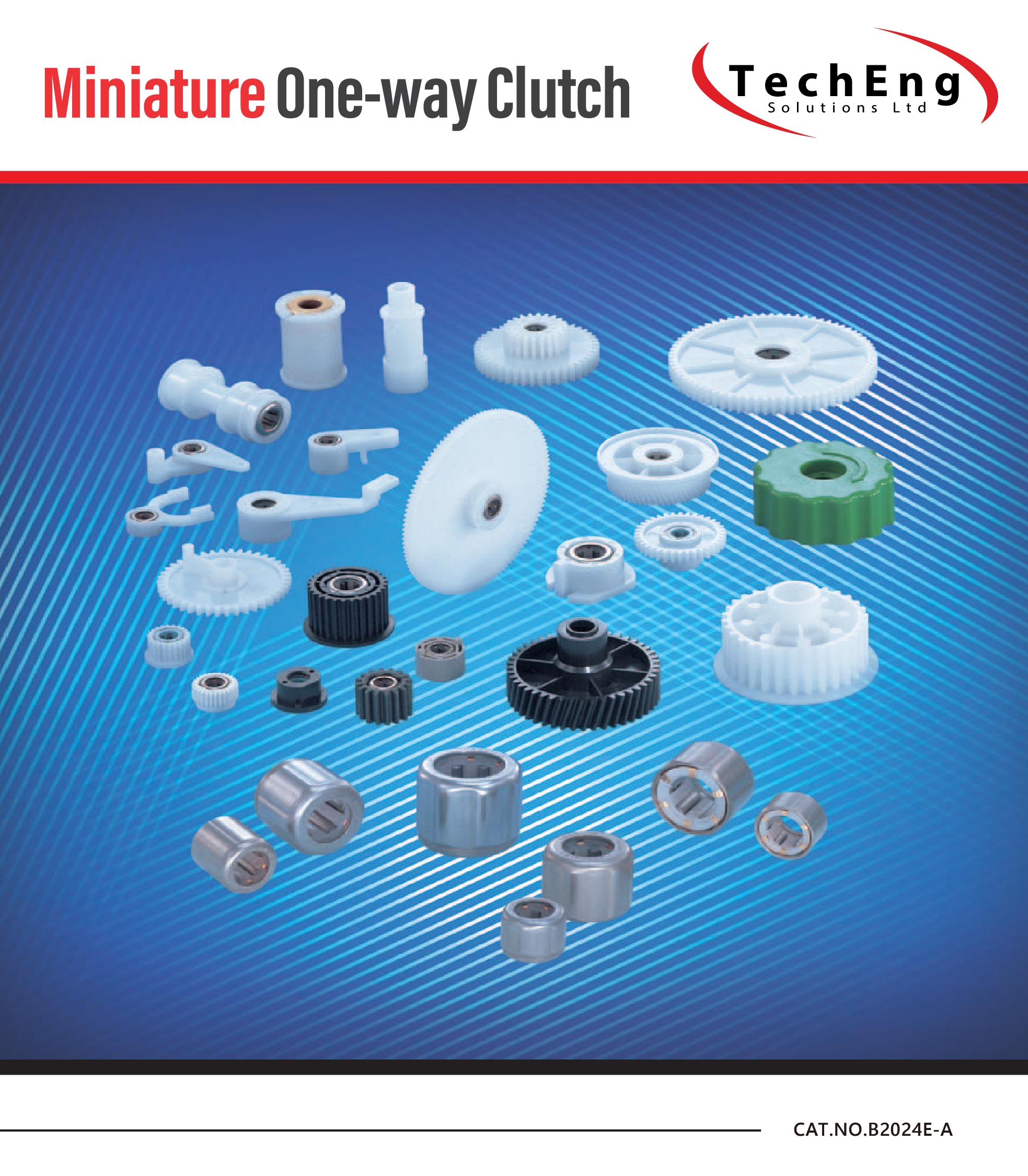
A Miniature One-way Clutch is a compact mechanical component designed to transmit torque in only one direction while allowing free, unpowered rotation in the opposite direction. It’s essentially a one-way clutch on a much smaller scale, often integrated into the design of a larger assembly. This functionality is also known as “overrunning” or “freewheeling.”
CATALOG
Needle Roller Bearing
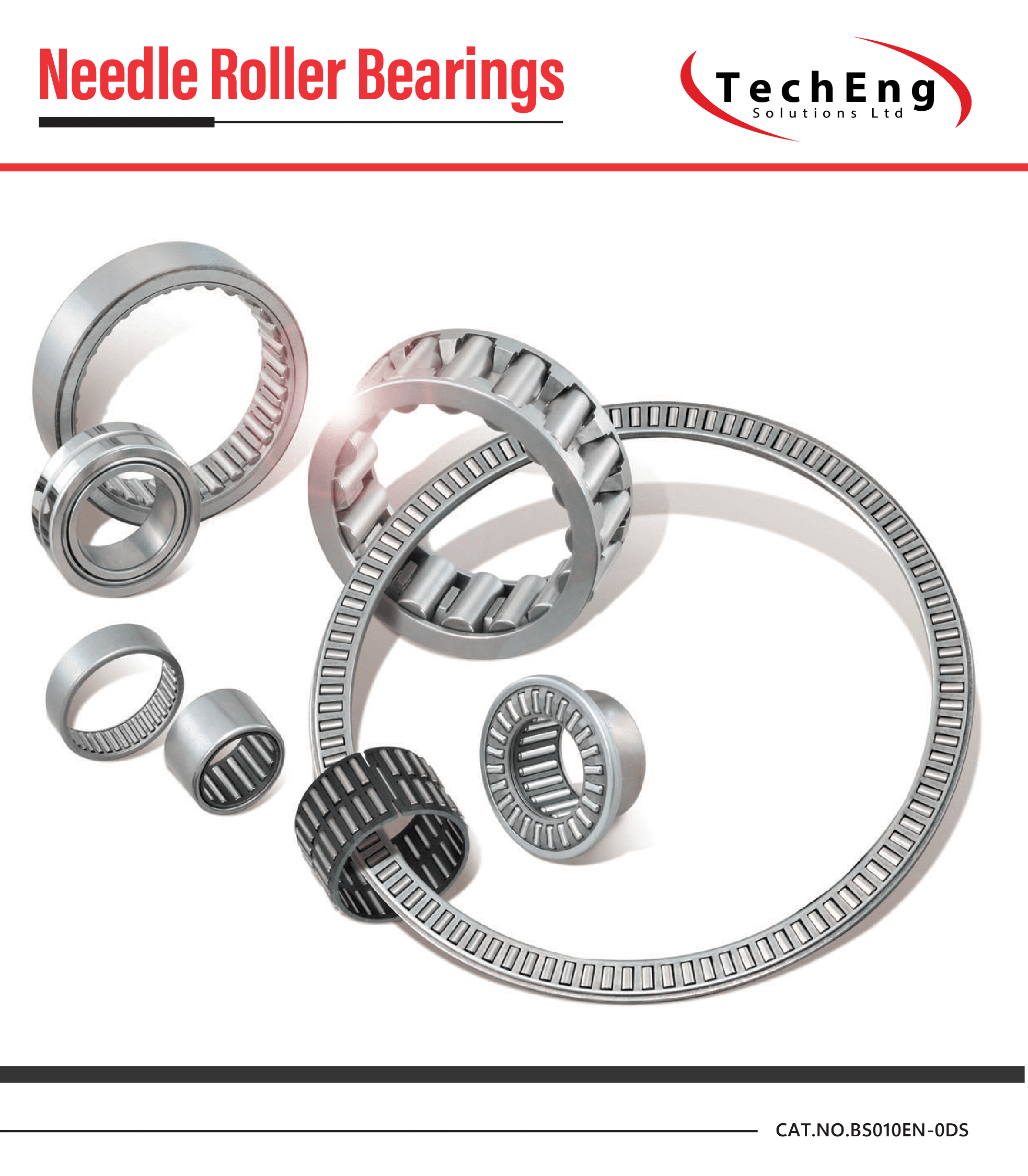
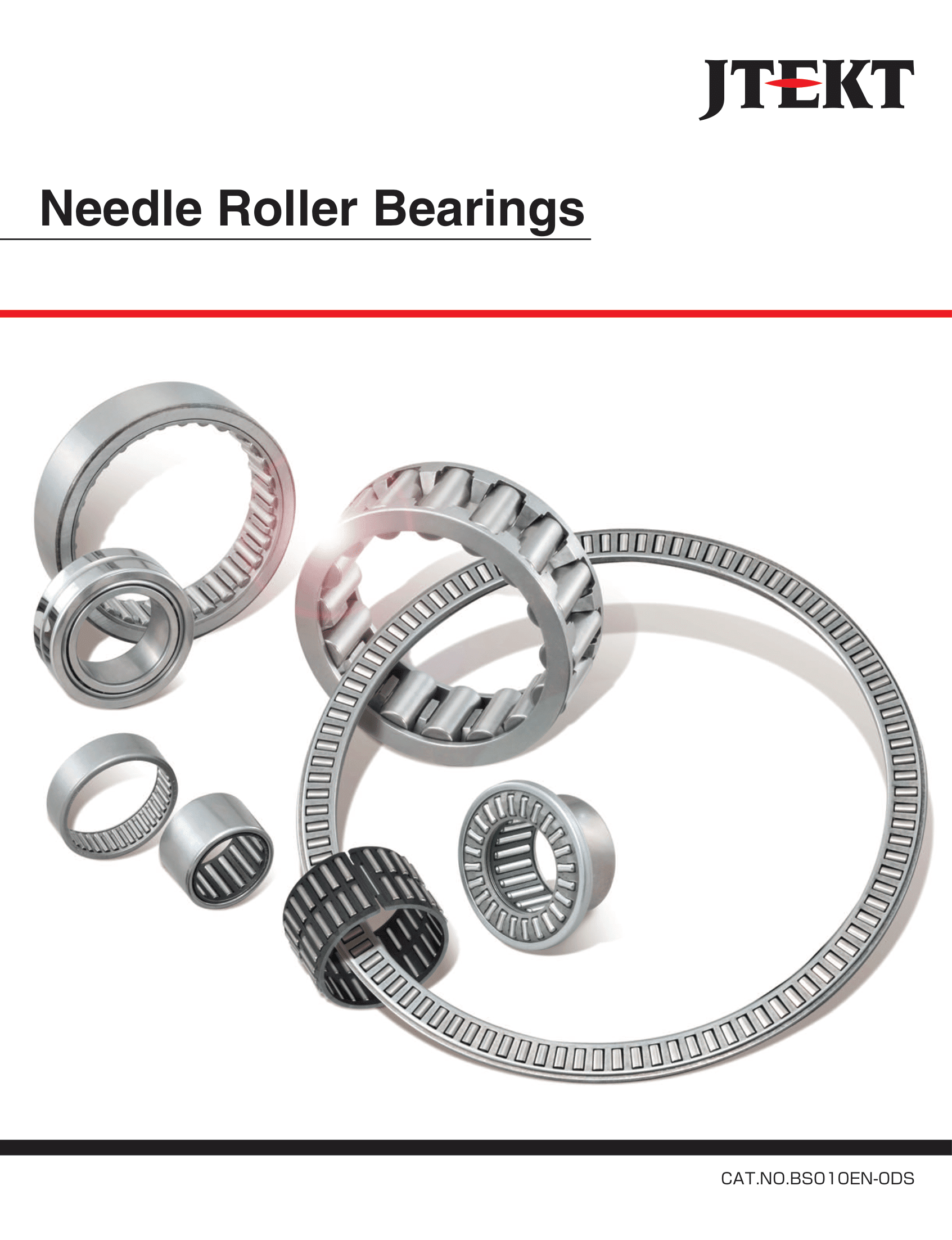
Main types of Needle Roller Bearings:
- Drawn Cup Needle Roller Bearings
- Solid Needle Roller Bearings
- Needle Roller and Cage Assemblies
- Thrust Needle Roller Bearings
- Combined Needle Roller Bearings
- Needle Roller Bearings with Inner Rings
- Cam Followers (Needle Roller Type)

-
Click and Collect The Price
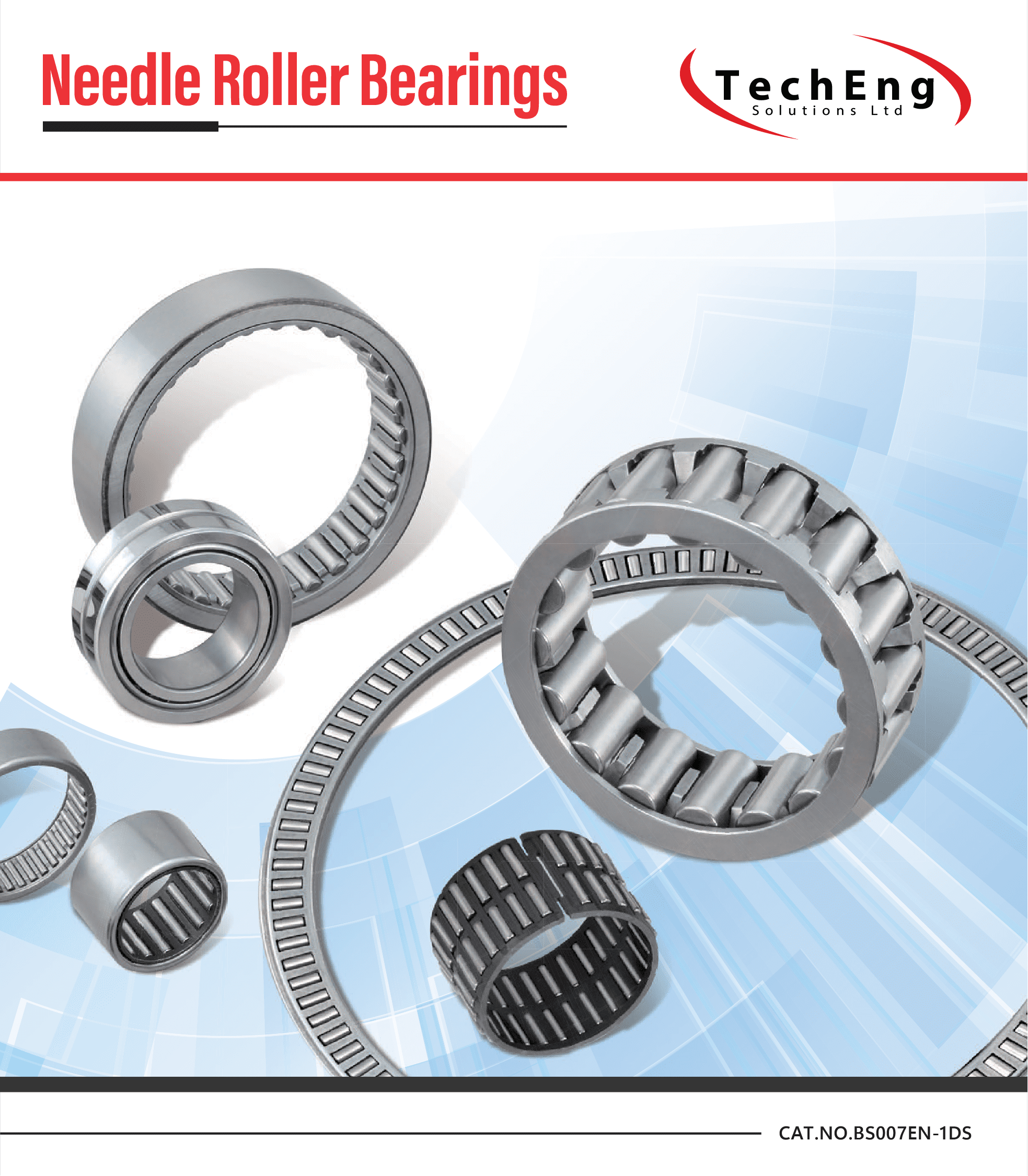
Needle Roller Bearing
Types of Needle Roller Bearing
- 1. Drawn Cup Needle Roller Bearings
- Have a thin-walled outer ring (cup) pressed from sheet steel.
- Compact, lightweight, and can handle high loads.
- Common in automotive and industrial applications.
- 2. Solid Needle Roller Bearings
- Made with a machined outer ring.
- Stronger and more rigid than drawn cup types.
- Suitable for heavy-duty applications.
- 3. Needle Roller and Cage Assemblies
- Consist of only rollers and a cage, without inner or outer rings.
- Compact and designed to fit directly into housings or shafts.
- Ideal when the shaft and housing can act as raceways.
- 4. Thrust Needle Roller Bearings
- Designed to handle axial loads (in one direction).
- Use a cage with needle rollers arranged radially.
- Often used in gearboxes and clutches.
- 5. Combined Needle Roller Bearings
- Combine a radial needle roller bearing with a thrust bearing.
- Handle both radial and axial loads simultaneously.
- 6. Needle Roller Bearings with Inner Rings
- Include a machined inner ring when the shaft surface cannot serve as a raceway.
- Provide flexibility in design and durability.
- 7. Cam Followers (Needle Roller Type)
- Special type with a thick outer ring.
- Designed for high radial loads and shock loads in cam and track systems.
Click and Collect The Catalog
Click and Collect The Price
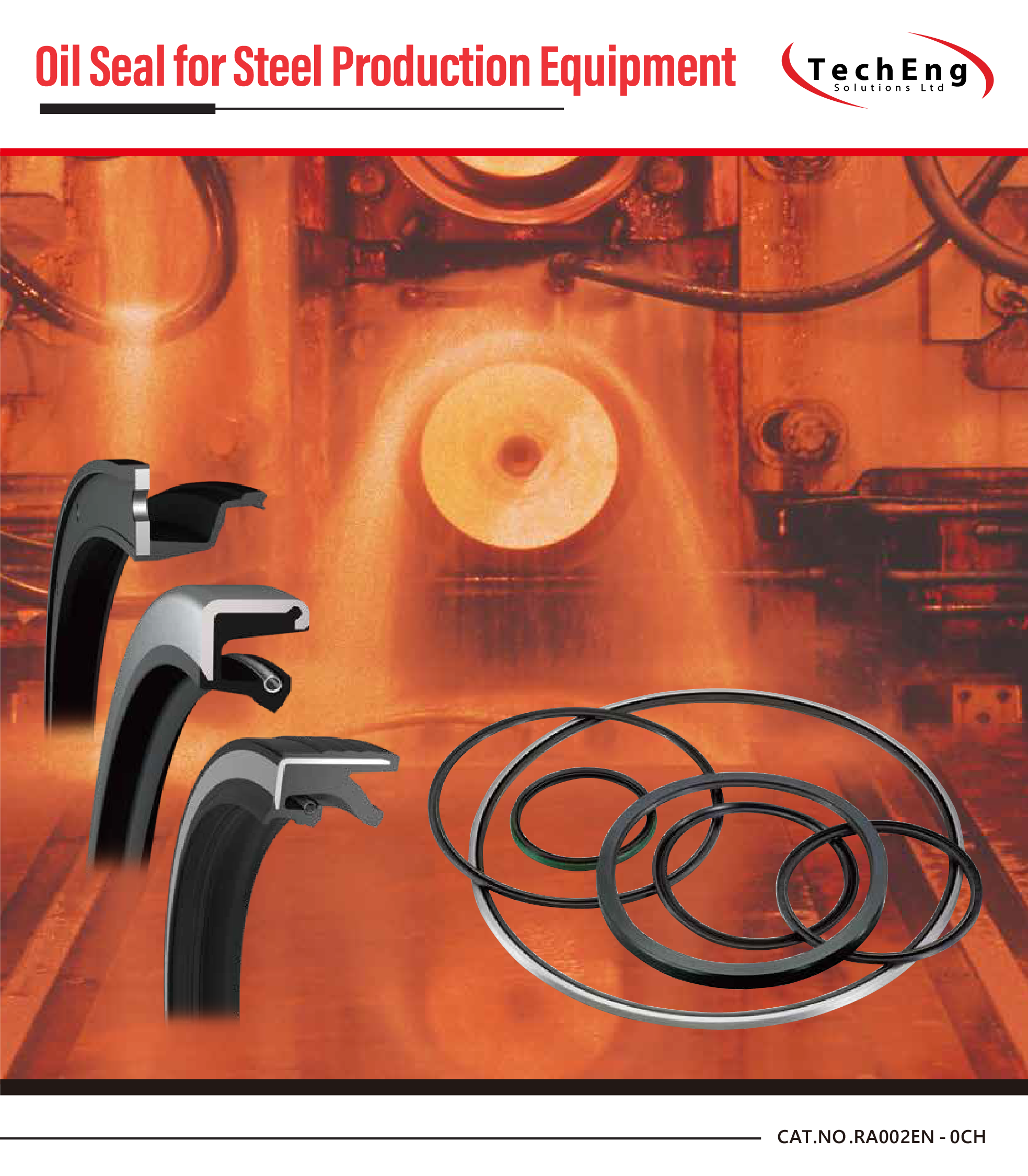
Oil Seal in Steel Production
Primary Functions oil Seal in Steel Production
-
Lubricant Retention: Steel production equipment, such as rolling mills, require a constant supply of lubrication to reduce friction and wear on bearings and other moving parts. The oil seal ensures that the lubricating oil or grease stays in place, preventing expensive leaks and ensuring the smooth and efficient operation of the machinery.
-
Contaminant Exclusion: The steel manufacturing process generates significant amounts of water (from cooling), dust, and abrasive scale. These contaminants can quickly damage sensitive components. An oil seal creates a tight barrier to prevent them from entering the equipment’s housing, thereby extending the lifespan of the machinery and reducing maintenance costs.
-
Pressure and Speed Management: Equipment like rolling mills operate at high speeds and under immense pressure. The oil seal must be designed to withstand these conditions without losing its integrity. Special designs and materials are used to ensure the seal’s performance even under extreme rotational speeds and fluid pressure.
-
Preventing Media Mixing: In some cases, a seal may be required to separate two different types of fluids, such as lubricating oil and cooling water. Oil seals with double lips can be used for this purpose, preventing the intermixture of these two media, which could lead to contamination and equipment failure.
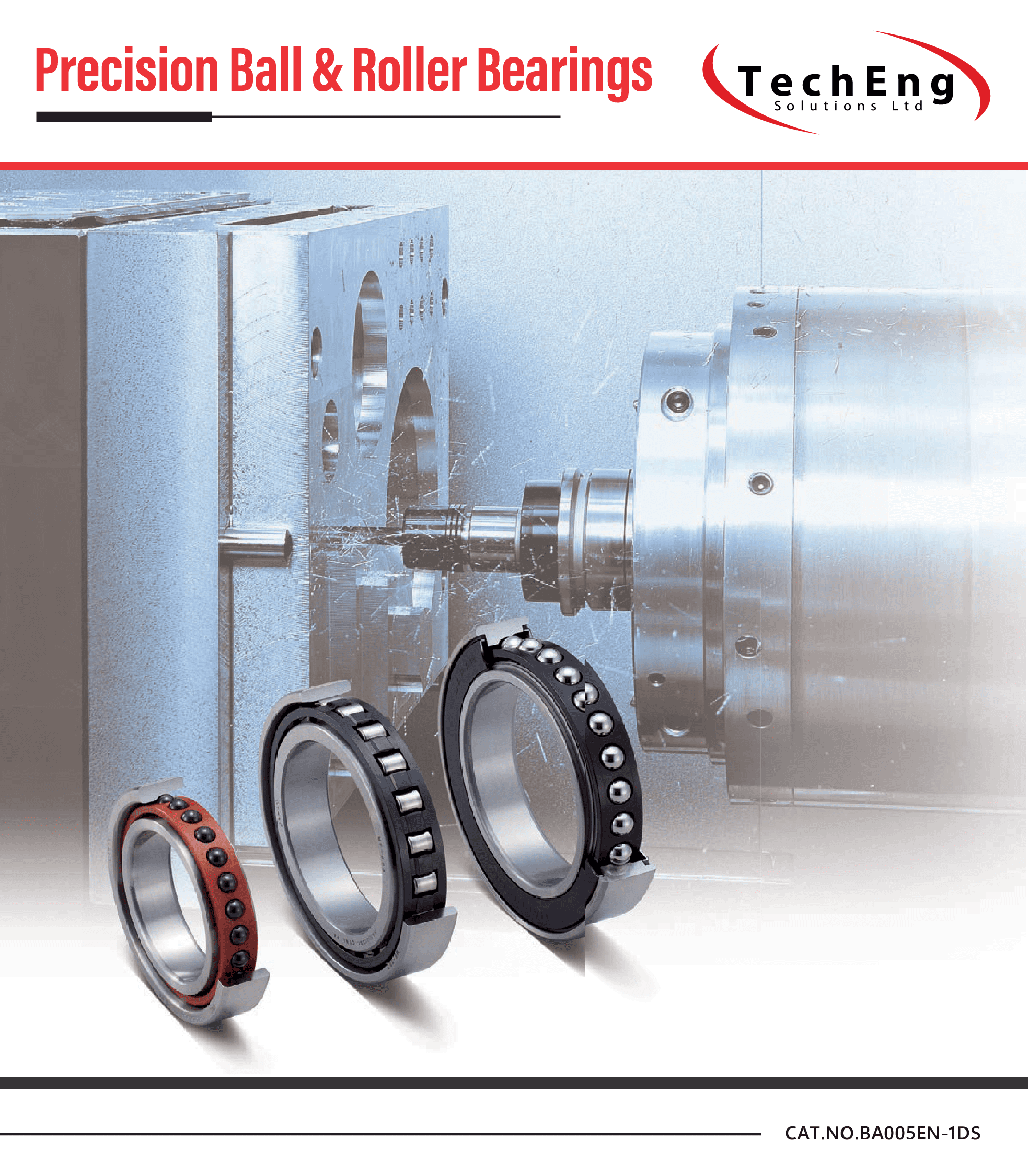
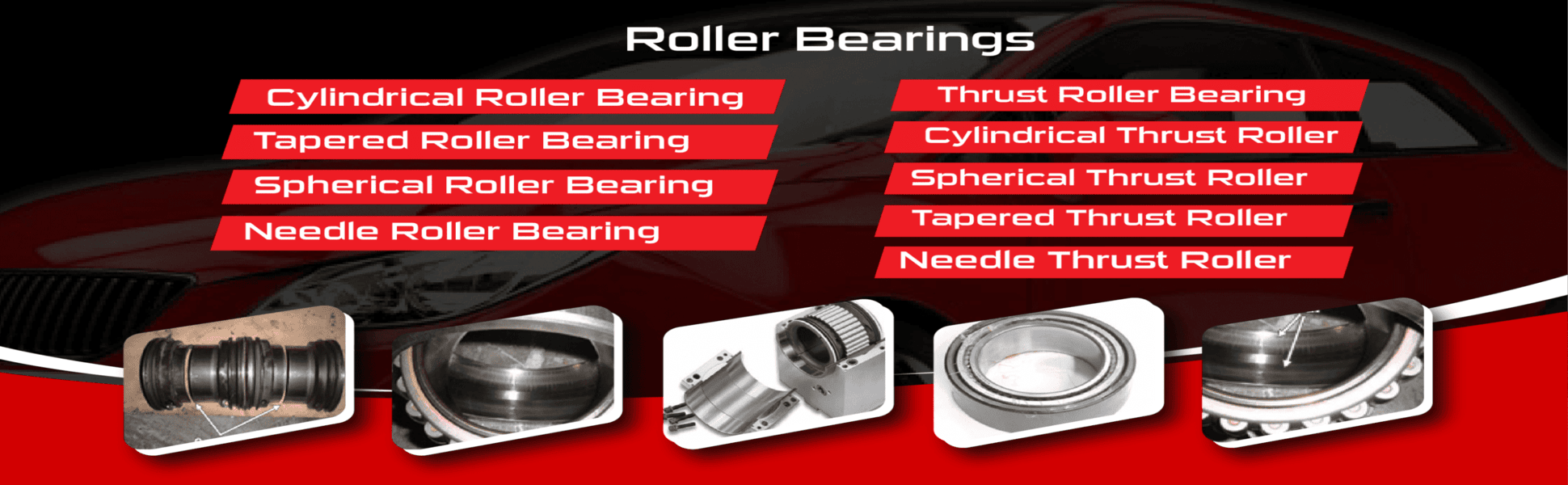
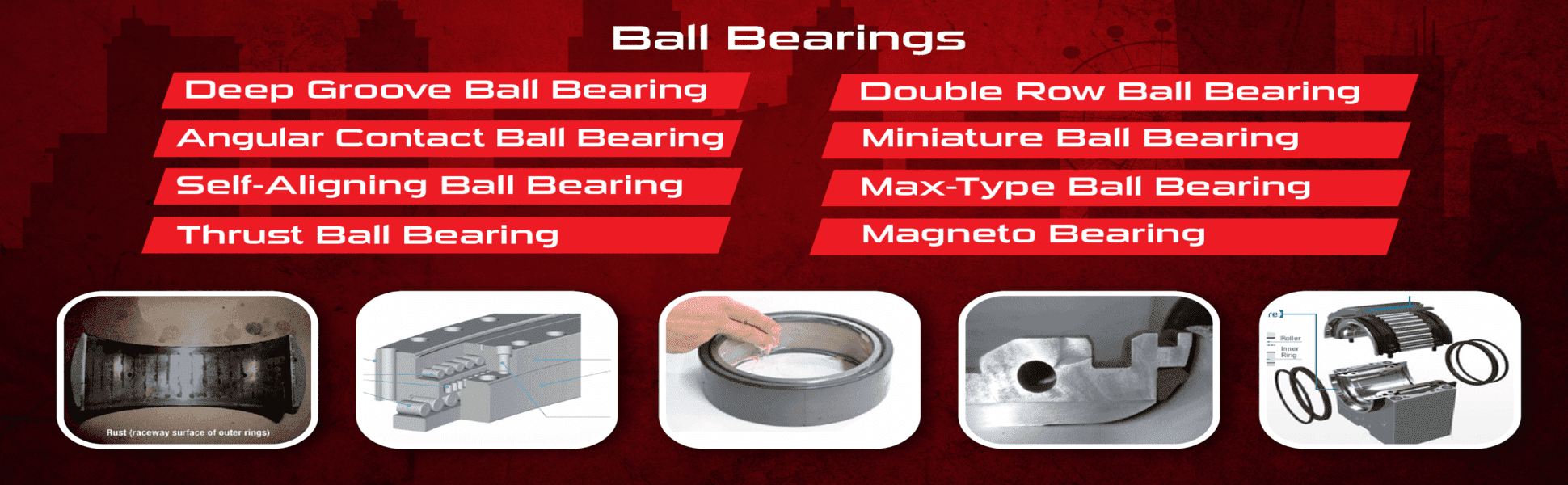
Precision Ball & Roller Bearing
Precision Ball and Roller Bearings are a specialized class of rolling-element bearings designed and manufactured to meet exceptionally high standards of accuracy, rigidity, and performance. They are a step above standard, or “unground,” bearings and are essential for applications where the utmost precision is required.
What Makes a Bearing “Precision”?
The key difference between a standard bearing and a precision bearing lies in its manufacturing tolerances. Precision bearings are produced to a much tighter set of specifications, which are typically defined by industry standards such as the ABEC (Annular Bearing Engineers Committee) scale in the United States or the ISO (International Organization for Standardization) grades.
For example, the ABEC scale goes from 1 to 9, with higher numbers indicating tighter tolerances and greater precision.
- ABEC 1 and 3: These are common grades for general-purpose applications.
- ABEC 5, 7, and 9: These are considered high-precision or “super-precision” grades.
This higher precision translates into several key performance benefits:
- Higher Rotational Accuracy: Precision bearings have very low runout (wobble), which is crucial for applications where the shaft must rotate with extreme accuracy.
- High-Speed Capability: The tight tolerances and smoother surfaces of precision bearings reduce friction and heat generation, allowing them to operate at much higher speeds without wear or failure.
- High Rigidity: Precision bearings are designed to minimize deflection under load, providing the stiffness needed for a stable and precise machine structure.
- Low Noise and Vibration: The superior manufacturing quality results in bearings that run quieter and with less vibration, which is critical for sensitive equipment.
- Longer Service Life: By reducing internal friction and stress, precision bearings can operate for a longer period before experiencing fatigue failure.
Applications of Precision Bearings
Due to their superior performance, precision bearings are used in a wide range of demanding industries and applications where performance and reliability cannot be compromised.
Precision Ball Bearings
Precision ball bearings are often chosen for applications that require high speed and can handle light to moderate loads.
- Machine Tools: Spindles for milling machines, lathes, and grinding machines where extreme accuracy is needed to produce high-quality parts.
- Aerospace: Components in aircraft engines, navigation systems, and control mechanisms.
- Medical and Surgical Equipment: High-speed dental drills, surgical instruments, and imaging scanners.
- Robotics: Joints and actuators that require precise, repeatable movements.
- High-Speed Motors: For electric motors, turbochargers, and other devices where high RPM is the main requirement.
Precision Roller Bearings
Precision roller bearings are ideal for applications that require high radial load capacity while still maintaining a high degree of accuracy.
- Machine Tools: Main spindles in heavy-duty lathes and mills where both high speed and heavy cutting forces are present.
- Industrial Gearboxes: For supporting large gears and shafts in heavy machinery.
- Wind Turbines: In the gearbox and generator, where they handle immense radial loads.
- Heavy Machinery: In a variety of equipment used in mining, construction, and metal processing where durability under load is a key factor.
- Automotive: Wheel hubs and transmissions in high-performance vehicles.
Click and Collect The Catalog
Click and Collect The Price
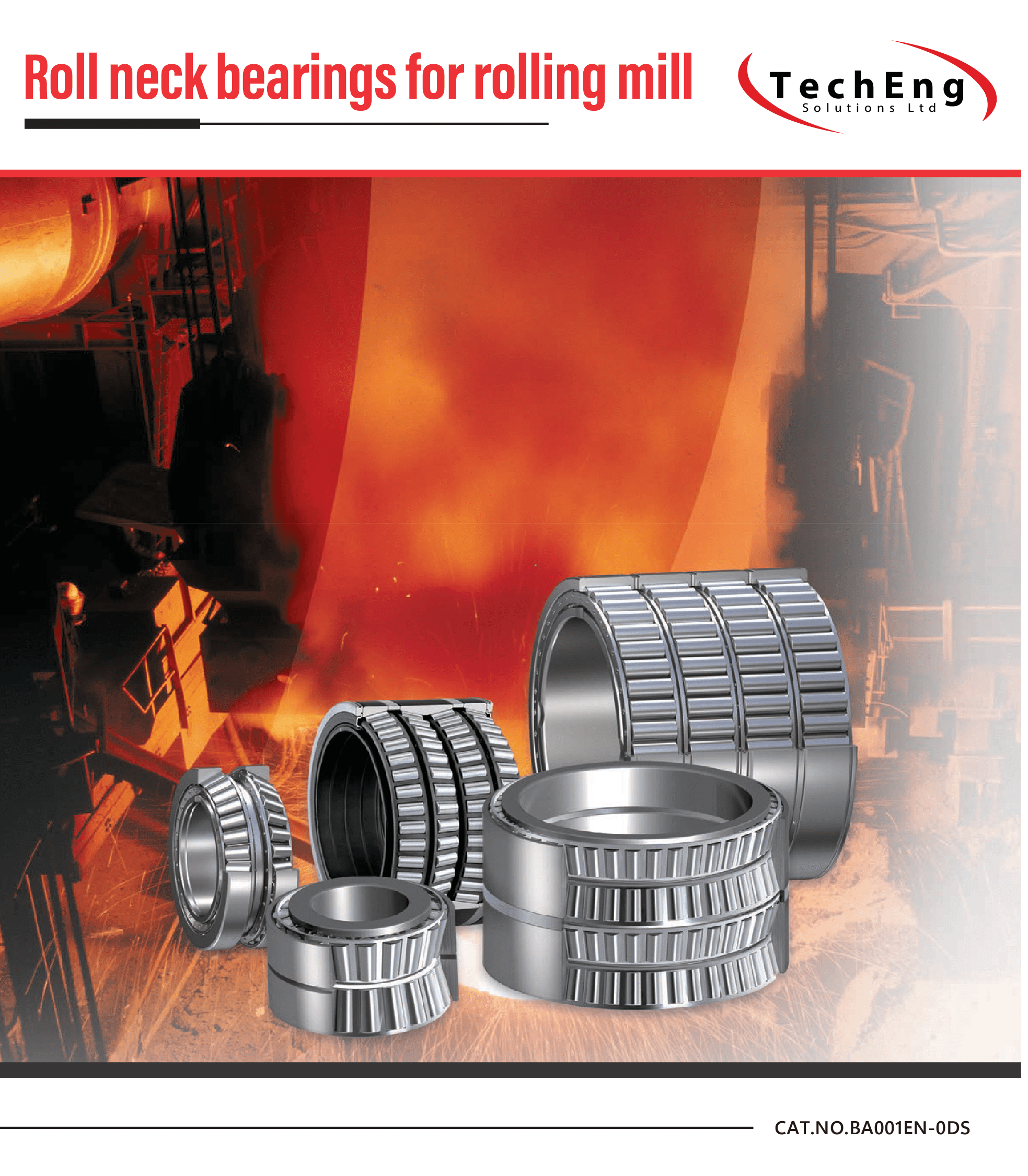
Roll Neck Bearing for Rolling Mill
Types and Characteristics Roll Neck Bearing
Due to the demanding conditions, several types of bearings are used as roll neck bearings, each with unique advantages:
Four-row tapered roller bearings: These are the most common type. They can handle a combination of high radial (vertical) and axial (horizontal) loads simultaneously, which is essential for rolling operations. They are also easy to mount and dismount, which is crucial for quick roll changes.
Four-row cylindrical roller bearings: These are used for applications that require high radial load capacity and high speeds. Because they do not handle axial loads, they are often paired with a separate thrust bearing to support the horizontal forces.
Spherical roller bearings: These bearings are self-aligning, which means they can accommodate some shaft misalignment without a reduction in performance. This makes them highly robust for the unpredictable forces in a rolling mill.
CATALOG
Click and Collect The Price
Seal and O Rings
What is Seal and Rings
In a mechanical context, a seal is a device or material used to prevent the leakage of fluid (like oil, water, or gas) from a system or to prevent the entry of contaminants (like dirt or dust). A ring, on the other hand, is a versatile component that can serve various functions, including sealing, but also includes other roles like providing structural support or transmitting power. A ring is often a part of a larger sealing system.