

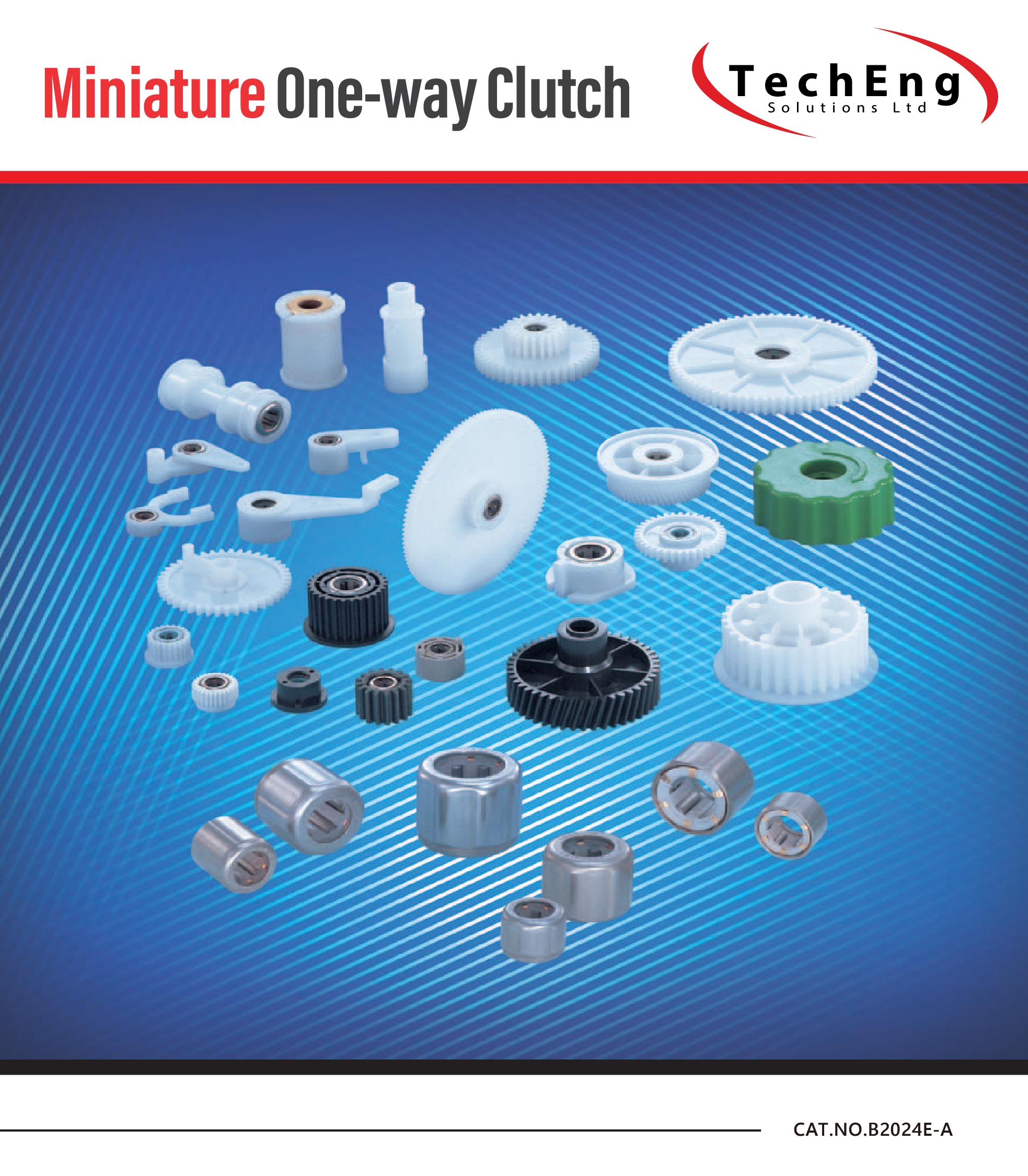




A Miniature One-way Clutch is a compact mechanical component designed to transmit torque in only one direction while allowing free, unpowered rotation in the opposite direction. It’s essentially a one-way clutch on a much smaller scale, often integrated into the design of a larger assembly. This functionality is also known as “overrunning” or “freewheeling.”
How It Works ⚙️
A miniature one-way clutch typically consists of a cylindrical inner race (or a shaft) and an outer race. Between these two components are small locking elements, such as rollers, sprags, or needles, held in place by a cage and springs.
- Engaged/Locking Direction: When torque is applied in the intended direction, the rollers or sprags are wedged between the inner and outer races. This wedging action creates a strong frictional force that “locks” the two races together, allowing torque to be transmitted from one to the other.
- Disengaged/Freewheeling Direction: When the direction of rotation reverses, the rollers or sprags are released from their wedged position. They roll freely, disengaging the inner and outer races and allowing the shaft to rotate without driving the outer component.
Applications of Miniature One way Clutch🛠️
Because of their small size and specific function, miniature one-way clutches are commonly used in devices where space is a premium and unidirectional motion is critical. Their applications include:
- Office Automation Equipment: In printers, copiers, and fax machines, they ensure paper feed rollers only move in one direction to prevent paper jams.
- Fishing Reels: They allow the handle to turn in one direction to retrieve line while preventing the spool from unwinding backwards.
- Robotics and Drones: Used in actuators and gearboxes to provide backstop functionality, preventing reverse motion and holding a position.
- Medical Devices: Found in small pumps and delivery systems where a fluid needs to be moved in a single, controlled direction.