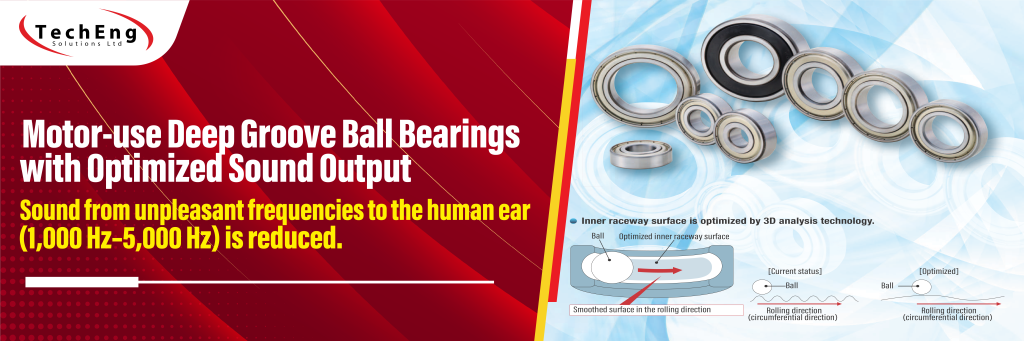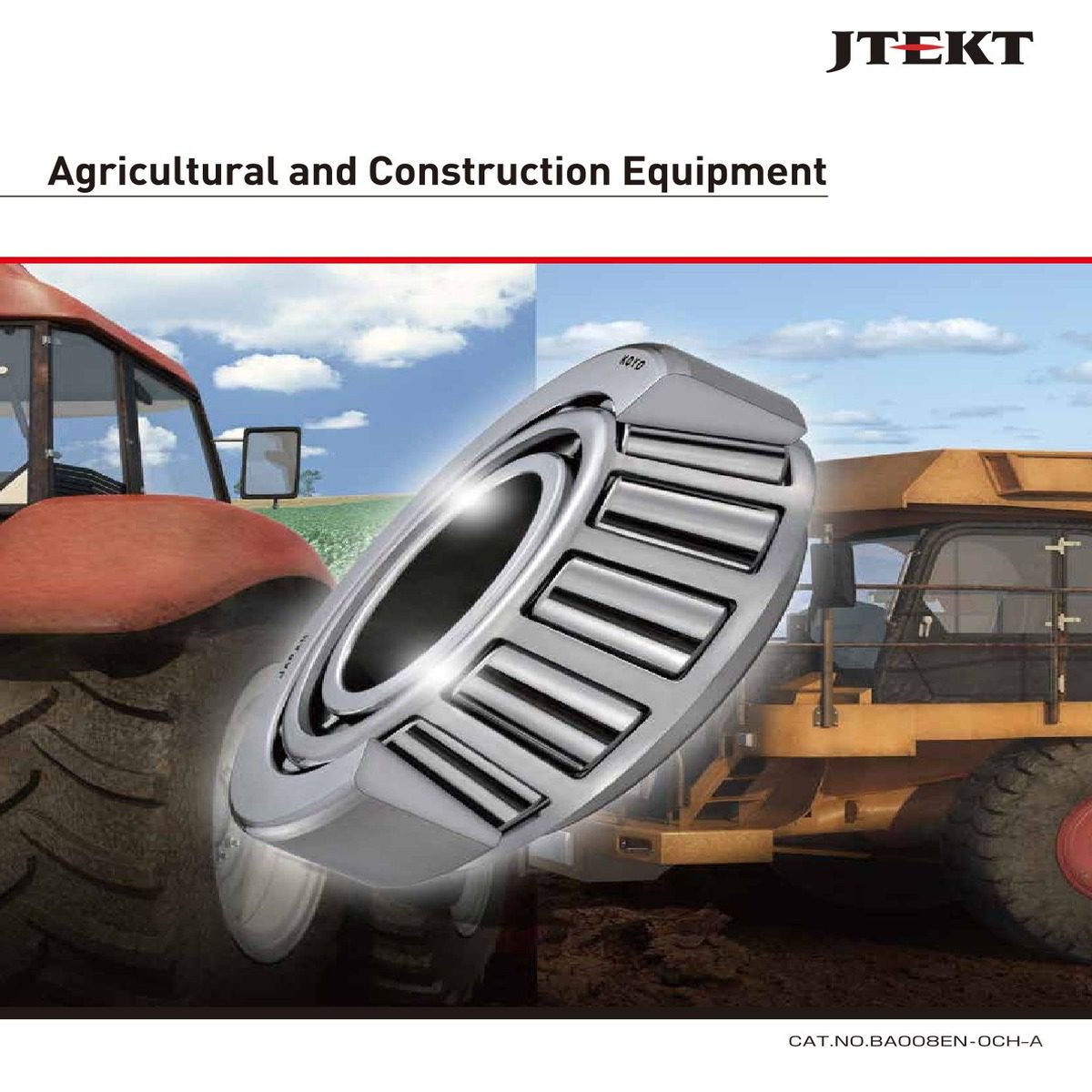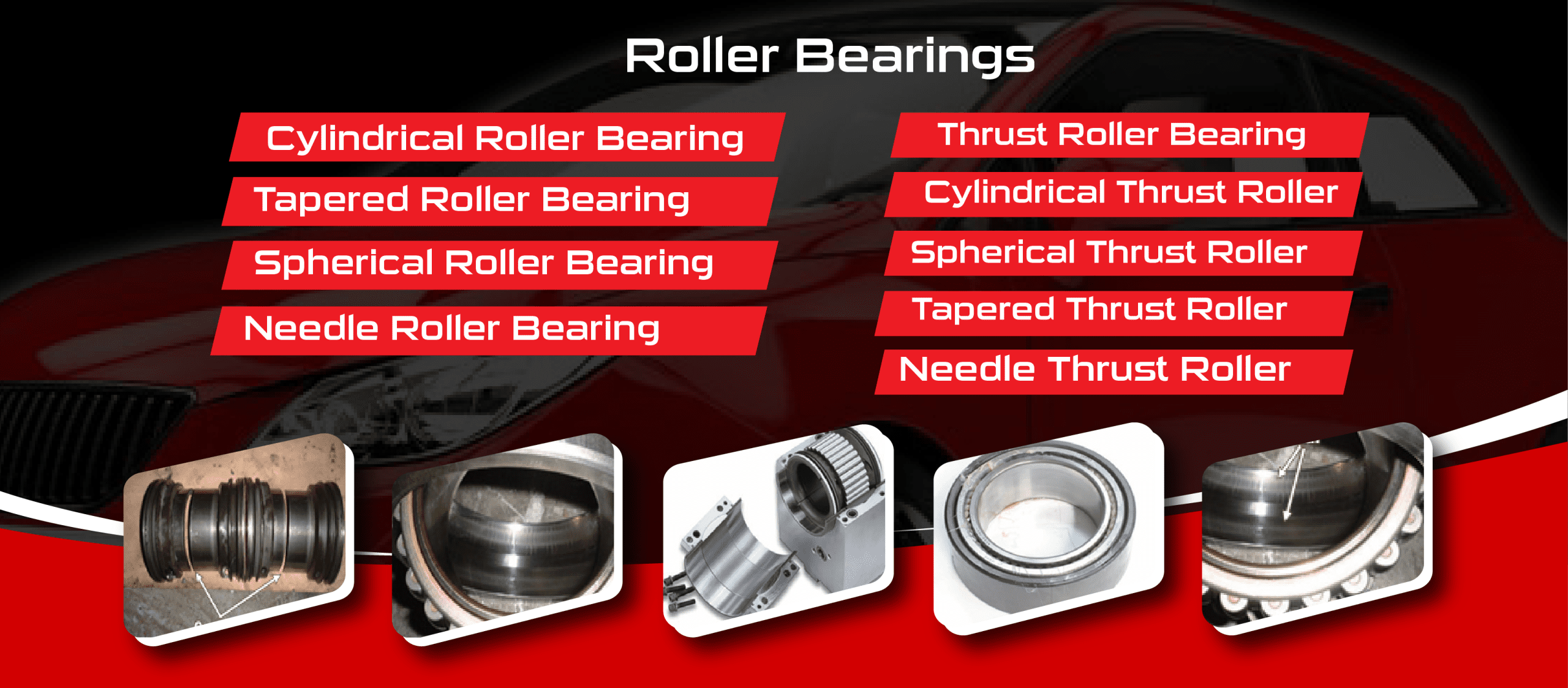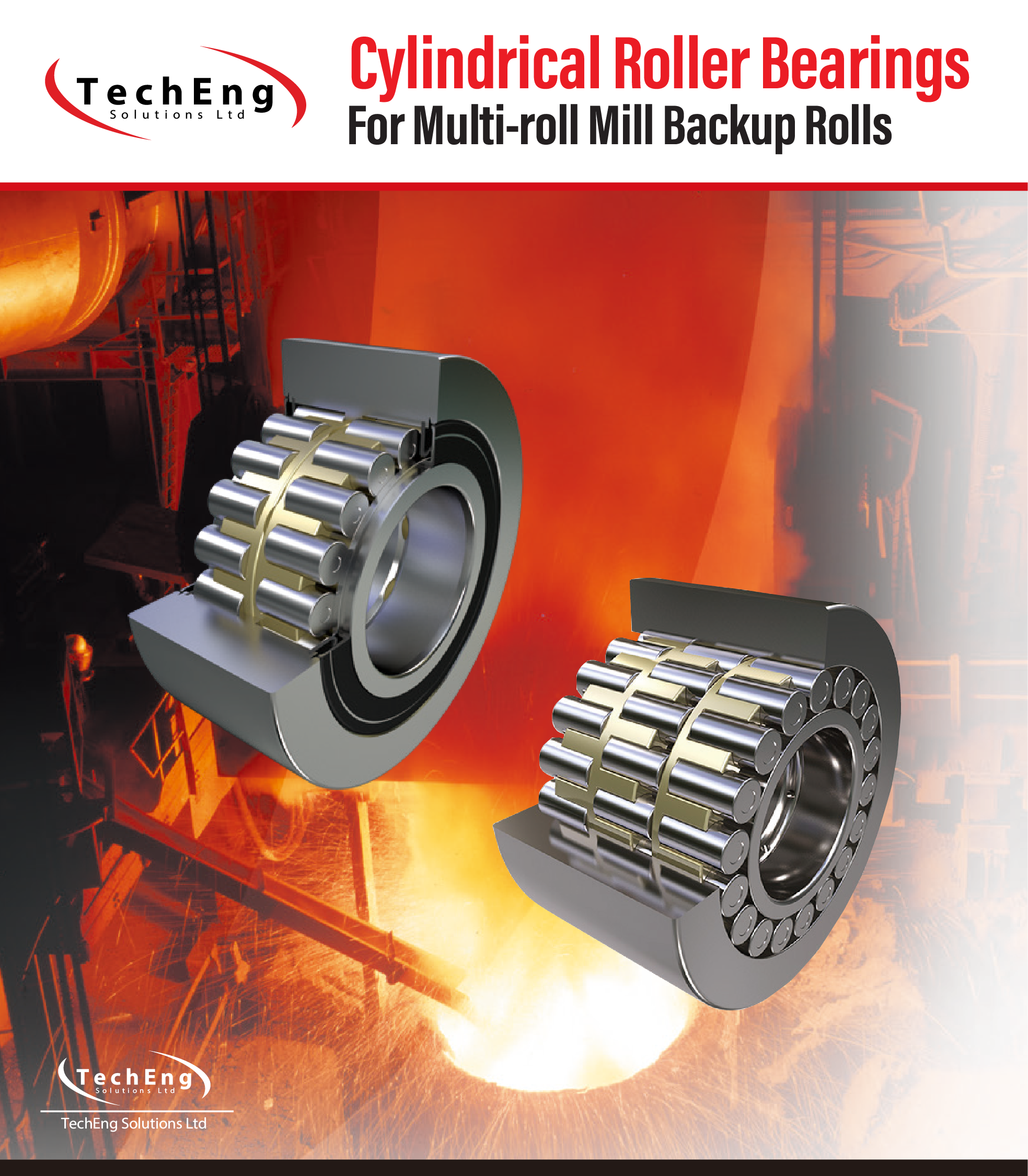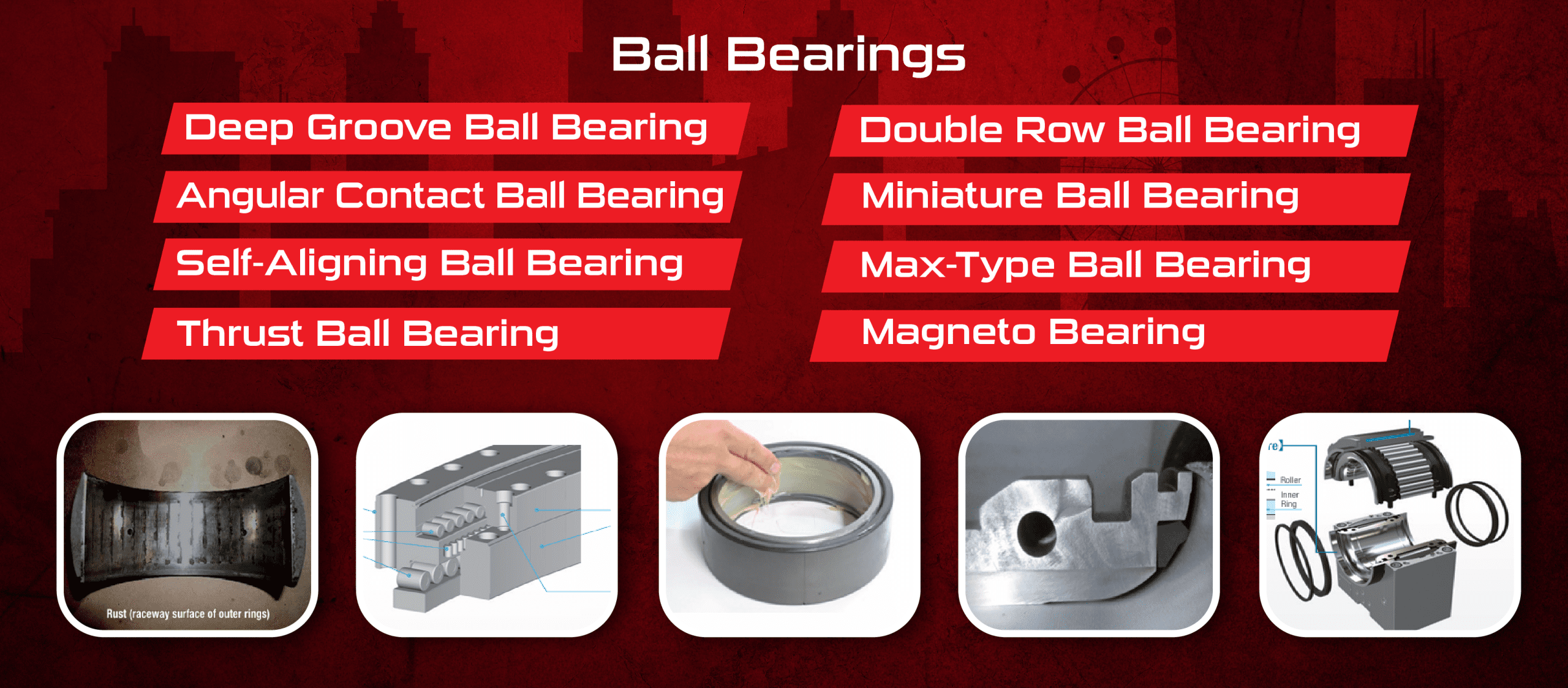


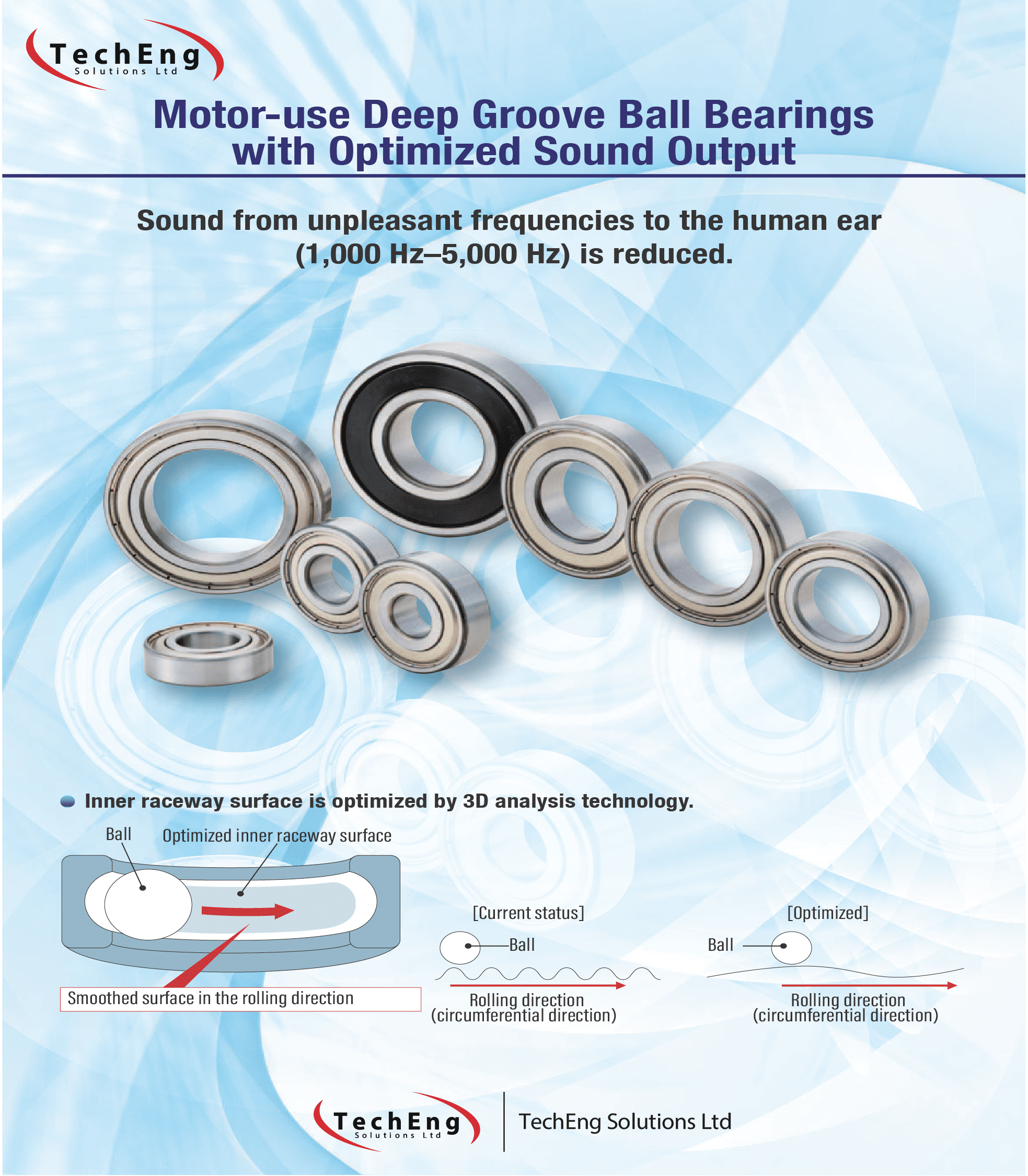


A Deep Groove Ball Bearing is the most common and widely used type of rolling-element bearing. It is a crucial component in countless machines and devices because of its simple design and versatile performance.
Components :
A deep groove ball bearing consists of four main parts:
Inner Ring: The inner ring fits onto a shaft and has a deep circular groove on its outer surface.
Outer Ring: The outer ring is stationary in the housing and also has a deep circular groove on its inner surface.
Balls: A set of spherical balls, which are the rolling elements, are placed between the inner and outer rings.
Cage (or Retainer): The cage is a separator that keeps the balls evenly spaced and prevents them from clumping together.
How It Works
The name “deep groove” comes from the deep, continuous raceway grooves on both the inner and outer rings. These grooves have a radius that is only slightly larger than the balls’ radius. This design allows the bearing to handle not only radial loads (forces perpendicular to the shaft) but also axial loads (forces parallel to the shaft) in both directions.
When a load is applied, the balls roll along these deep raceways, which significantly reduces friction compared to two surfaces sliding against each other. This low-friction, low-torque design allows for high rotational speeds, quiet operation, and efficient energy transfer.
Key Features and Advantages :
Versatility: Can handle both radial and axial loads.
High-Speed Capability: The design and low friction allow for very high rotational speeds.
Low Friction and Noise: Ideal for applications where quiet and efficient operation are required.
Easy to Mount: Their simple and robust design makes them easy to install and maintain.
Low Maintenance: Many deep groove ball bearings are sealed and pre-lubricated for life, requiring little to no maintenance.
Applications :
Deep groove ball bearings are used in a vast range of industries and products, from everyday household items to heavy industrial machinery. Some common applications include:
Automotive: Engines, transmissions, wheel hubs, alternators, and gearboxes.
Household Appliances: Washing machines, vacuum cleaners, fans, and air conditioners.
Industrial Machinery: Electric motors, pumps, conveyor systems, and power tools.
Aerospace: In various components that require precision and reliability.
Recreational: Skateboards, bicycles, and inline skates.